
Learn English Grammar Easily
English Grammar is the foundation of effective communication. Whether you are a student, a competitive exam aspirant, or someone who wants to improve spoken and written English, understanding grammar rules is essential. This page covers all important English grammar topics in a simple and easy-to-understand way, helping you build strong language skills.
From basic concepts like nouns, pronouns, verbs, adjectives, and tenses to advanced topics, everything is explained with clear examples. Our goal is to make English grammar learning simple, practical, and useful for real-life situations as well as exams.
Narration (Direct and Indirect Speech) - Introduction | English Grammar
Narration (Direct and Indirect Speech)
Introduction
Narration (कथन)
हमारी कही गयी बातें कथन (statement/speech) होती है | जिसे grammar की भाषा में Narraion कहा जाता है |
Narration दो प्रकार के होते हैं |
(i) Direct Speech: जब हम किसी की कही गयी speech को हुबहू (ठीक उसी प्रकार) रख देते है तो इस प्रकार के speech को direct speech कहते है |
जैसे : Mohan said to me, " I am going to play music."
मोहन ने मुझसे कहा, " मैं संगीत बजाने जा रहा हूँ |"
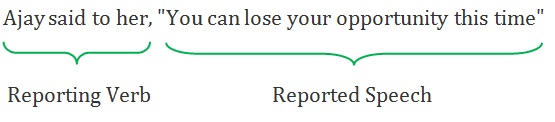
Ajay said to her, "You can lose your opportunity this time"
अजय ने उससे कहा, "तुम इस वक्त अपना मौका गँवा सकती हो |"
# यहाँ कही गयी speech को " " inverted commas में रखा गया है जो ठीक उसी प्रकार है जिस प्रकार कहने वाले ने उसे कहा था |
(ii) Indirect Speech: जब हम किस की कही गयी speech को हुबहू न कह कर उसके कथन (speech) को अपने तरीके से कहते है तो उस speech को indirect speech कहते हैं |
जैसे : Mohan told me that he was going to play music.
मोहन ने मुझसे कहा कि वह संगीत बजाने जा रहा है |
Ajay told her that she could lose her opportunity that time.
अजय ने उससे कहा कि वह उस वक्त अपना मौका गँवा सकती है |
# यहाँ speech और उसका कहने का तरीका बदल गया | लेकिन मूल बात वही है |
Direct speech के दो भाग होते है |
(i) Reporting verb
(ii) Reported speech
Pronouns को कैसे बदलें ?
Reported Speech अर्थात " " (inverted Commas) के अन्दर के Pronouns जैसे - I, We, you, my, He, She, it, They आदि को इस table की मदद से निम्न नियमों के अनुसार बदलें |
S O N
1 2 3
1st Person को subject के अनुसार बदलें |
2nd Person को object के अनुसार बदलें |
3rd Person में कोई बदलाव नहीं अर्थात No Changing.
Personal Pronouns
| Singular | Plural | |||||
| Persons | Subject | Possesive | Object | Subject | Possesive | Object |
| Ist person | I | My | Me | We | Our | Us |
| 2nd Person | You | Your | You | You | Your | You |
| 3rd Person | He She It | His Her Its | Him Her It | They | Their | Them |
यदि reporting verb का Tense Past Tense में हो तो reported speech का Tense निम्नानुसार बदले, इस simple rule से Tense बदल जाता है :
(i) is/am/are ⇒ was/were में
(ii) was/were ⇒ had been में
(iii) has/have ⇒ had में
(iv) V1 ⇒ V2 में
(v) do not/does not ⇒ did not में
(vi) V2 ⇒ had + V3 में
(vii) can ⇒ could में
(viii) may ⇒ might में और
(ix) will/shall ⇒ would/should में बदले
Tense को बदलना :
उपरोक्त नियम के उपयोग से;
⇒ Present Indefinite को Past Indefinite में
⇒ Present Continuous को Past Continuous में
⇒ Present Perfect को Past Perfect में
⇒ Past Indefinite को Past Perfect में
⇒ Past Continuous को Past Perfect Continuous में बदल जायेगा |
Example 1:
I want (V1) a new pen. (Present Indefinite)
I wanted (V2) a new pen. (Past Indefinte)
# यहाँ want verb का first form को verb के second form wanted में सिर्फ बदल देने से पूरा tense बदल जाता है |
Example 2 :
I was taking rest. (Past Continuous Tense)
I had been taking rest. (Past Perfect Continuous Tense)
# यहाँ was को had been में बदल देने से Tense कैसे बदल गया ?
दूसरा उदाहरण:
He was (V2 को) ill today. (Past Indefinte)
He had been (had been में) ill today. (Past Perfect)
# यहाँ भी यही नियम कार्य करेगा | आपने देखा कि Past Indefinite का वाक्य was को had been में बदल देने से Past Perfect बन जाता है |
Example 3:
She does not live in Mumbai. (Presnet Indefinite)
She did not live in Mumbai. (Past Indefinite)
# यहाँ ऊपर के नियम apply कर सिर्फ Helping Verbs बदल देने से Tense बदल गया |
You are playing cricket. (Present Continuous Tense)
You were playing cricket. (Past Continuous Tense)
इसके साथ-साथ inverted commas के अंदर के इन शब्दों (words) को भी बदले |
Now ⇒then
today ⇒ that day
tonight ⇒ that night
Here ⇒ there
Hence ⇒ Thence
Yesterday ⇒ The previous day
tomorrow ⇒ The next day
This ⇒ that
These ⇒ Those
Narration (Direct and Indirect Speech)-Topics
Introduction is an important part of Narration (Direct and Indirect Speech) in English grammar. It helps learners understand how sentences are formed and how ideas are expressed clearly and correctly. Mastering this topic improves both writing and speaking skills, making communication more effective.
In this section of Narration (Direct and Indirect Speech), you will learn the rules, usage, and examples of Introduction . Each concept is explained in a simple and easy-to-understand manner so that students can grasp it quickly and apply it in real-life situations as well as exams.
✨ You May Also Like This!
View Related Article
NCERT Solutions Class 6-12Here You will learn how to write a paragraphs, essays, letters, notice, reports, article and so many writing skills
Understanding Introduction under Narration (Direct and Indirect Speech) also helps in avoiding common grammatical errors. Regular practice of this topic will strengthen your foundation in English grammar and boost your confidence in using the language correctly.
English Grammar-Chapters
✨ You May Also Like This!
View Related Article
CBSE NotesHere You will learn how to write a paragraphs, essays, letters, notice, reports, article and so many writing skills
Why English Grammar is Important?
Good knowledge of English grammar helps you write correctly, speak confidently, and avoid common mistakes. It improves your sentence structure, clarity, and overall communication skills. Whether you are preparing for school exams, competitive exams, or interviews, grammar plays a crucial role in your success.
What You Will Learn
On this page, you will learn all major English grammar topics including parts of speech, tenses, active and passive voice, direct and indirect speech, articles, prepositions, and more. Each topic is explained with examples, rules, and practice questions to strengthen your understanding.
Start Learning Today
Mastering English grammar becomes easy when you practice regularly. Explore each topic step by step, understand the rules, and apply them in your daily communication. With consistent learning, you can improve your English quickly and effectively.
✨ You May Also Like This!
View Related Article
Learn Writing SkillsHere You will learn how to write a paragraphs, essays, letters, notice, reports, article and so many writing skills
